Rilanciamo volentieri
l’Omelia – in inglese – tenuta dal card. Burke nella festa di S. Teresa d’Avila,
presso l’abbazia premostratense di Strahov, in Praga, dove sono conservate le
spoglie di San Norberto, fondatore dell’ordine.
FEAST OF SAINT TERESA OF AVILA,
VIRGIN
BASILICA OF THE ASSUMPTION OF THE
BLESSED VIRGIN MARY
PREMONSTRATENSIAN ABBEY OF
STRAHOV
PRAGUE
15 OCTOBER 2016
2 Cor 10, 17-18; 11, 1-2
Mt 25, 1-13
HOMILY
Praised be Jesus Christ!
Now and
for ever.
It brings me profound joy to
offer the Pontifical Mass in this most beautiful church dedicated to Our Savior
and to His Immaculate Mother under her title of the Assumption. I am grateful
to almighty God Who has granted me to make pilgrimage to the historic
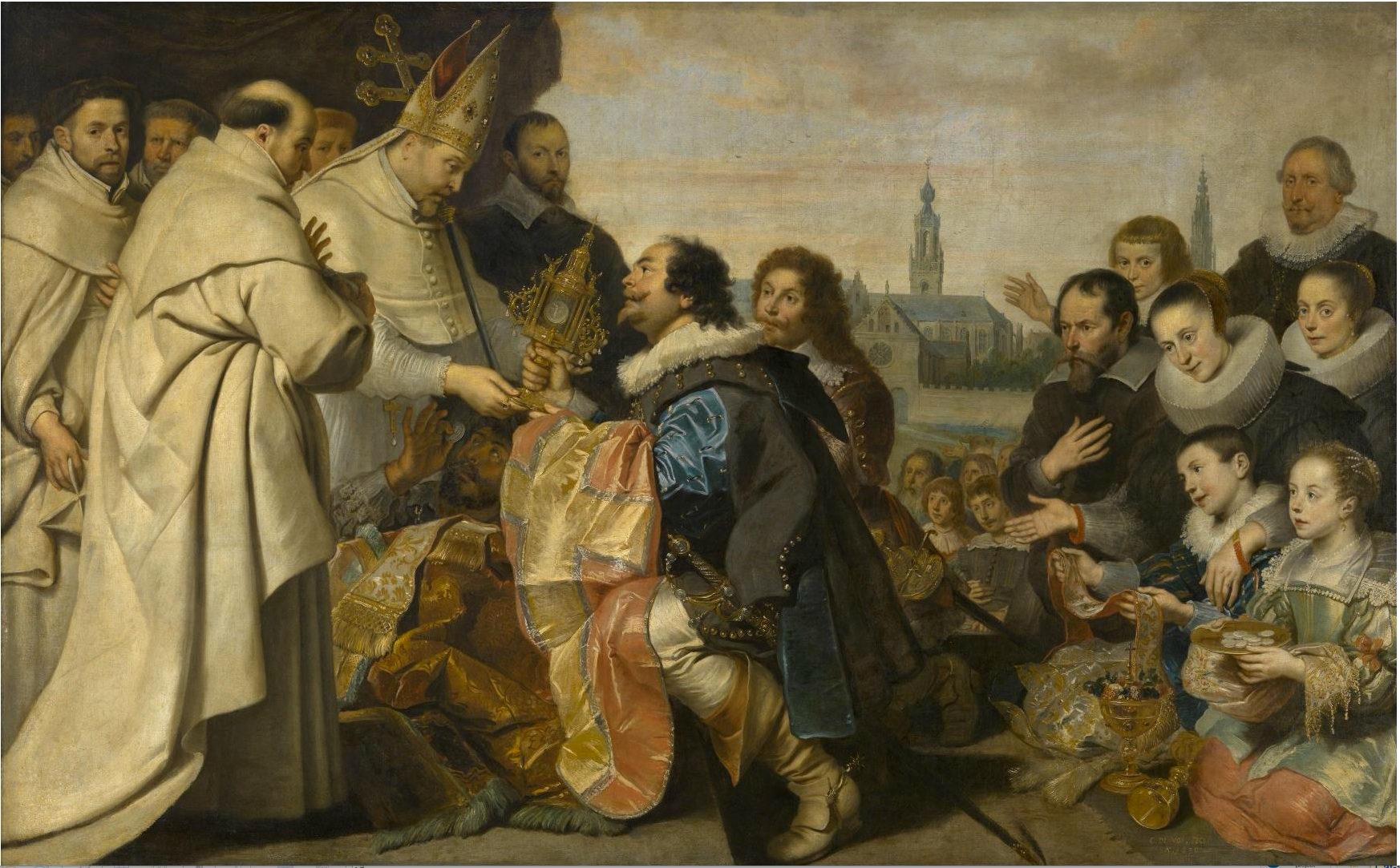
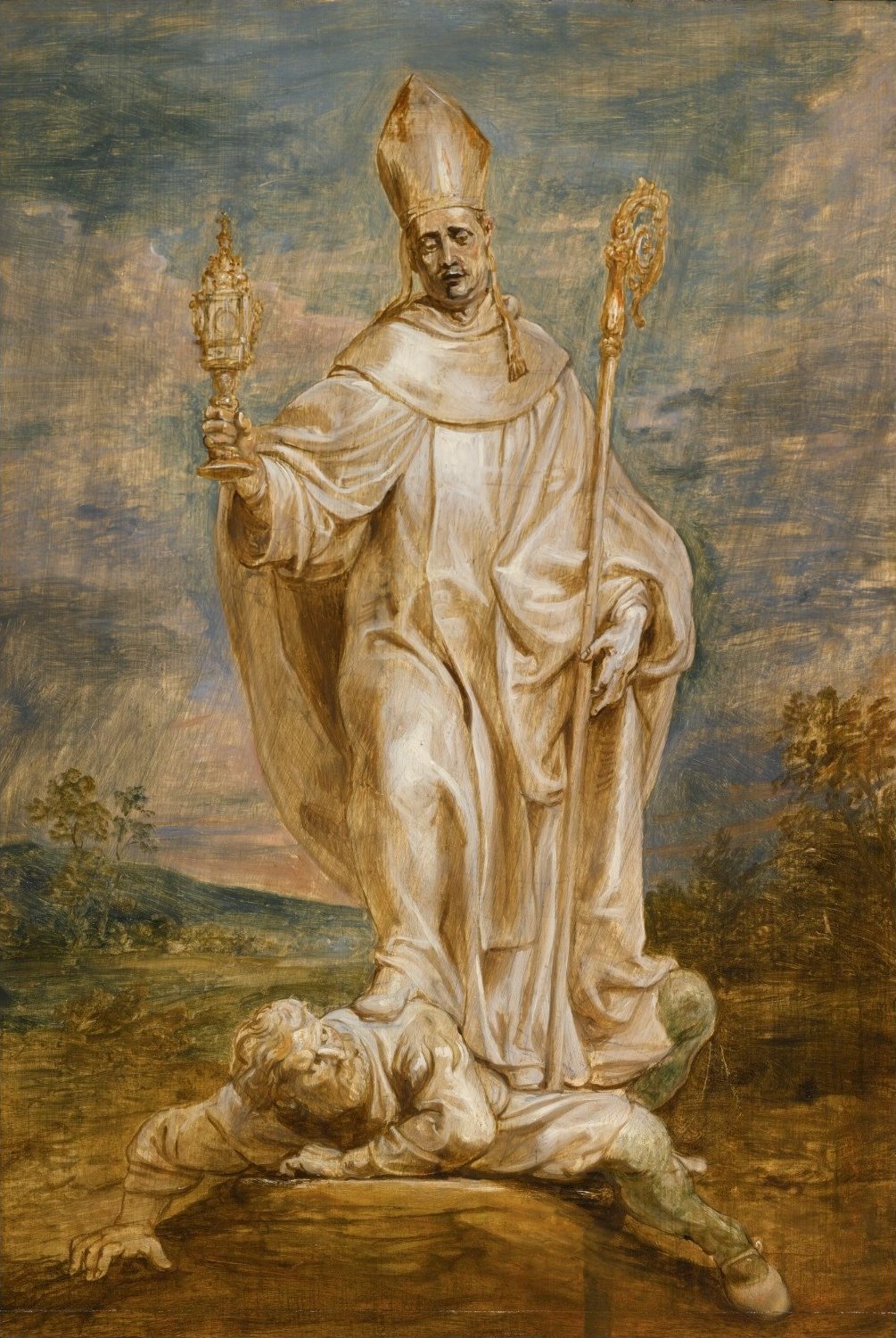
Premonstratensian Abbey of Strahov and to pray at the tomb of Saint Norbert. I
thank Father Abbot and all of the canons of the Abbey for their most warm
hospitality, and I thank all who have prepared so well the celebration of the
Pontifical Mass. In a particular way, I thank the Institute of Christ the King
Sovereign Priest for providing the assistance for the Pontifical Mass, even as
I am deeply grateful for the presence of Monsignor Gilles Wach, the Founder of
the Institute. With deepest esteem and gratitude, I acknowledge the presence of
Knights and Dames of the Grand Priory of Bohemia of the Sovereign Military
Order of Malta, of which I am privileged to be the Cardinal Patron. I take the
occasion to express once again my gratitude to Lucie Cekotova and to all who
have worked with her to organize my visit to your beloved homeland, the Czech
Republic. In deepest gratitude, I offer the Holy Mass for the intentions of the
Church in the Czech Republic and the intentions of Strahov Abbey.
Today, we celebrate the feast of
Saint Teresa of Avila, Virgin and Doctor of the Church. We recall the heroic
sanctity of her life and its many fruits, including the reform of the Carmelite
Order, which she carried out together with Saint John of the Cross, and her
spiritual writings which continue to inspire and strengthen many souls to seek
more perfect union with God. The life and death of Saint Teresa open our eyes
to contemplate the mystery of Christ’s love, which is daily at work in our
souls. Dom Prosper Guéranger, commenting on today’s feast, extolled the great
gift of her spiritual writings:
Having arrived at the mountain of God, she described the road by which she had come, without any pretension but to obey him who commanded her in the name of the Lord. With exquisite simplicity and unconsciousness of self, she related the works accomplished for her Spouse; made over to her daughters the lessons of her own experience; and described the many mansions of that castle of the human soul, in the centre of which, he that can reach it will find the holy Trinity residing as in an anticipated heaven. No more was needed: withdrawn from speculative abstractions and restored to its sublime simplicity, Christian mysticism again attracted every mind; light reawakened love; the virtues flourished in the Church; and the baneful effects of heresy and its pretended reform were counteracted.[1]
Christ called Saint Teresa to
give herself totally – in every fiber of her being – to Him, in order that she
might bring His light and love to her brothers and sisters. From His glorious
pierced Heart, Christ poured forth the sevenfold gift of the Holy Spirit into
the heart of Saint Teresa, so that, she, as His bride through religious
profession, could be the effective sign and instrument of His pure and selfless
love.
Reflecting upon her life in Christ, we come to understand the words of Saint Paul in his Second Letter to the Corinthians. Addressing the members of the Church at Corinth, who had come to life in Christ through Saint Paul’s sacred ministry, Saint Paul declares: “[F]or I am jealous of you with the jealousy of God. For I have espoused you to one husband, that I may present you as a chaste virgin to Christ” (2 Cor 11, 2). The grace of the Holy Spirit, which came into the life of Saint Teresa of Avila and comes into our lives through the Apostolic ministry, espouses the Church as His Bride to Christ, her one and only Bridegroom. The jealousy of Saint Paul for the members of the Church is the jealousy of Christ Who does not want anyone who has become one with Him through faith and baptism to stray from Him and, thus, lose the gift of eternal salvation in Him.
Reflecting upon her life in Christ, we come to understand the words of Saint Paul in his Second Letter to the Corinthians. Addressing the members of the Church at Corinth, who had come to life in Christ through Saint Paul’s sacred ministry, Saint Paul declares: “[F]or I am jealous of you with the jealousy of God. For I have espoused you to one husband, that I may present you as a chaste virgin to Christ” (2 Cor 11, 2). The grace of the Holy Spirit, which came into the life of Saint Teresa of Avila and comes into our lives through the Apostolic ministry, espouses the Church as His Bride to Christ, her one and only Bridegroom. The jealousy of Saint Paul for the members of the Church is the jealousy of Christ Who does not want anyone who has become one with Him through faith and baptism to stray from Him and, thus, lose the gift of eternal salvation in Him.
The Parable of the Ten Virgins
helps us to understand the mystery of Christ’s life at work in the life of
Saint Teresa and in each of our lives, producing a rich harvest of holiness of
life (cf Mt 15, 1-13). At the same time, it makes clear that Christ’s life in
us depends upon our free response, our response of love to His immeasurable and
ceaseless love of us in the Church. The wise virgins treasure, most of all,
their consecration to the bridegroom and, therefore, they take care that their
lamps always burn brightly to receive the bridegroom at his coming. So, too, we
who belong totally to Christ, by the works of His love, keep ourselves ready to
meet Christ at His Coming, both in the circumstances of our daily Christian
life but also on the Last Day, when He will return in glory to restore all
creation to the Father. Like the wise virgins, we know that there is nothing
more important than to be vigilant, at all times, in waiting for Christ and in
welcoming Him into our lives. Our Lord speaks to us at the conclusion of the
Parable of the Virgins: “Watch therefore, for you know neither the day nor the
hour” (Mt 25, 13).
The foolish virgins grow careless about the gift of their bond with the bridegroom. His coming, therefore, takes them by surprise, and they are not ready to welcome him. So, too, we are tempted to lose the sense of wonder at the great mystery of God’s love which rescues us from the snares of Satan and fills us with divine love. In little and big ways, we are tempted to be inattentive to daily communion with Christ through prayer, devotion, participation in the Holy Eucharist, the daily examination of conscience and act of contrition, and the regular meeting with Christ in the Sacrament of Penance. Instead of giving our hearts totally to Christ, as we are called to do, we begin to live more and more for ourselves and for certain earthly goods and pleasures which, at any given moment, can distract us from the true source of our freedom and joy, Christ, our one and only Bridegroom.
The foolish virgins grow careless about the gift of their bond with the bridegroom. His coming, therefore, takes them by surprise, and they are not ready to welcome him. So, too, we are tempted to lose the sense of wonder at the great mystery of God’s love which rescues us from the snares of Satan and fills us with divine love. In little and big ways, we are tempted to be inattentive to daily communion with Christ through prayer, devotion, participation in the Holy Eucharist, the daily examination of conscience and act of contrition, and the regular meeting with Christ in the Sacrament of Penance. Instead of giving our hearts totally to Christ, as we are called to do, we begin to live more and more for ourselves and for certain earthly goods and pleasures which, at any given moment, can distract us from the true source of our freedom and joy, Christ, our one and only Bridegroom.
Saint Teresa is a powerful
example of the heroic virginal love of Christ, to which we are all called. From
her first intimation of Christ’s call to the religious life, she responded with
all her heart. No matter how much resistance she encountered on the way of
following Christ in the religious life, especially in the reform of the
Carmelite Order, whether it came from her family, from her fellow religious in
the Order, or from the society in which she was living, Christ was always first
in her life. In a most wonderful way, her joy in spending hours in prayer,
especially before the Most Blessed Sacrament, was a sign of her wisdom and
fidelity as a bride of her Eucharistic Lord. As a wise virgin, she, through
prayer and the life of the Sacraments, kept an abundance of oil for the lamp of
her daily Christian living, so that she was always ready to meet our Lord, at
His coming.
May Saint Teresa of Jesus teach us to persevere in trust, as she did in the face of much opposition and many trials. May she assist us in accepting with joy our suffering with Christ, so that we may enjoy with Him the unending joy of His Resurrection. Referring to Saint Teresa’s motto, “To suffer or to die,”[2] Dom Prosper Guéranger, citing the great preacher Jacques-Bénigne Bossuet, reminds us of the timeliness of the spiritual doctrine of Saint Teresa, embodied in her life and death:
May Saint Teresa of Jesus teach us to persevere in trust, as she did in the face of much opposition and many trials. May she assist us in accepting with joy our suffering with Christ, so that we may enjoy with Him the unending joy of His Resurrection. Referring to Saint Teresa’s motto, “To suffer or to die,”[2] Dom Prosper Guéranger, citing the great preacher Jacques-Bénigne Bossuet, reminds us of the timeliness of the spiritual doctrine of Saint Teresa, embodied in her life and death:
If we are true Christians, we must desire to be ever with Jesus Christ. Now, where are we to find this loving Saviour of our souls? In what place may we embrace Him? He is found in two places: in His glory and in His sufferings; on His throne and on His cross. We must, then, in order to be with Him, either embrace Him on His throne, which death enables us to do; or else share in His cross, and this we do by suffering; hence we must either suffer or die, if we would never be separated from our Lord. Let us suffer then, O Christians; let us suffer what it pleases God to send us: afflictions, sicknesses, the miseries of poverty, injuries, calumnies; let us try to carry, with steadfast courage, that portion of His cross, with which He is pleased to honour us.[3]
With Saint Teresa, we are certain
that, if only we give our hearts to Christ, our one and only Bridegroom, the
evils we encounter in our personal lives and in society will be overcome by the
immeasurable and enduring truth, goodness and beauty of Christ, which is made
visible to us in the Sacred Liturgy, above all, in the offering of the Holy
Sacrifice of the Mass. May Saint Teresa teach us to imitate her in fidelity to
prayer and devotion, and to the life of the Sacraments, above all the Holy
Eucharist and Penance, so that Christ may transform us and our world, in accord
with His unceasing desire that all men be one with Him, that all men be saved
for eternal life.
Let us now lift up our hearts,
one with the Immaculate Heart of Mary, to the glorious pierced Heart of Jesus
through His Eucharistic Sacrifice. Resting our hearts in His Most Sacred Heart,
we will find the healing of our sins and the strength of divine love, in order
to do God’s will in all things. Let us, with Mary Immaculate and Saint Teresa
of Jesus, be confident that, from His Sacred Heart, there flows unceasingly and
without measure the grace of the Holy Spirit, which overcomes sin in our lives
and in the world, and prepares us and the world to welcome our Lord, at all
times and at His Final Coming, with our lamps burning brightly.
Heart of Jesus, King and center of all hearts, have mercy on us.
O Blessed Virgin Mary, Queen assumed into heaven, pray for us.
Heart of Jesus, King and center of all hearts, have mercy on us.
O Blessed Virgin Mary, Queen assumed into heaven, pray for us.
Saint Joseph, Foster-Father of
Jesus and true Husband of the Virgin Mary, pray for us.
Saint Norbert, pray for us.
Saint Teresa of Jesus, pray for
us.
In the name of the Father, and of
the Son, and of the Holy Spirit.
+ Raymond Leo Cardinal BURKE
NOTES
[1] “Arrivée donc à la montagne de Dieu, elle fit le relevé des étapes de la route qu’elle avait parcourue, sans autre prétention que d’obéir à qui lui commandait au nom du Seigneur ; d’une plume exquise de limpidité, d’abandon, elle raconta les œuvres accomplies pour l’Époux ; avec non moins de charmes, elle consigna pour ses filles les leçons de son expérience, décrivit les multiples demeures de ce château de l’âme humaine au centre duquel, pour qui sait l’y trouver, réside en un ciel anticipé la Trinité sainte. Il n’en fallait pas plus ; soustraite aux abstractions spéculatives, rendue à sa sublime simplicité, la Mystique chrétienne attirait de nouveau toute intelligence ; la lumière réveillait l’amour ; et les plus suaves parfums s’exhalaient de toutes parts au jardin de la sainte Église, assainissant la terre, refoulant les miasmes souls lesquels l’hérésie d’alors et sa réforme prétendue menaçaient d’étouffer le monde.” Prosper Guéranger, L’année liturgique, Le temps après la Pentecôte, Tome V, 12ème éd. (Tours: Maison Alfred Mame et Fils, 1925), p. 457. [Guéranger]. English translation: Prosper Guéranger, The Liturgical Year, Time after Pentecost, Book V (Fitzwilliam, NH: Loreto Publications, 2000), pp. 396-397. [GuérangerEng].
[1] “Arrivée donc à la montagne de Dieu, elle fit le relevé des étapes de la route qu’elle avait parcourue, sans autre prétention que d’obéir à qui lui commandait au nom du Seigneur ; d’une plume exquise de limpidité, d’abandon, elle raconta les œuvres accomplies pour l’Époux ; avec non moins de charmes, elle consigna pour ses filles les leçons de son expérience, décrivit les multiples demeures de ce château de l’âme humaine au centre duquel, pour qui sait l’y trouver, réside en un ciel anticipé la Trinité sainte. Il n’en fallait pas plus ; soustraite aux abstractions spéculatives, rendue à sa sublime simplicité, la Mystique chrétienne attirait de nouveau toute intelligence ; la lumière réveillait l’amour ; et les plus suaves parfums s’exhalaient de toutes parts au jardin de la sainte Église, assainissant la terre, refoulant les miasmes souls lesquels l’hérésie d’alors et sa réforme prétendue menaçaient d’étouffer le monde.” Prosper Guéranger, L’année liturgique, Le temps après la Pentecôte, Tome V, 12ème éd. (Tours: Maison Alfred Mame et Fils, 1925), p. 457. [Guéranger]. English translation: Prosper Guéranger, The Liturgical Year, Time after Pentecost, Book V (Fitzwilliam, NH: Loreto Publications, 2000), pp. 396-397. [GuérangerEng].
[2] “Souffrir ou mourir!” Guéranger, p. 462. English
translation : GuérangerEng, p. 401.
[3] “Si nous sommes de vrais chrétiens, nous devons
désirer d’être toujours avec Jésus-Christ. Or, où le trouve-t-on, cet aimable
Sauveur de nos âmes ? En quel lieu peut-on l’embrasser ? On ne le trouve qu’en
ces deux lieux : dans sa gloire ou dans ses supplices, sur son trône ou bien
sur sa croix. Nous devons donc, pour être avec lui, ou bien l’embrasser dans
son trône, et c’est ce que nous donne la mort, ou bien nous unir à sa croix, et
c’est ce que nous avons par les souffrances ; tellement qu’il faut souffrir ou
mourir, afin de ne quitter jamais le Sauveur. Souffrons donc, souffrons,
chrétiens, ce qu’il plaît à Dieu de nous envoyer : les afflictions et les
maladies, les misères et la pauvreté, les injures et les calomnies ; tâchons de
porter d’un courage ferme telle partie de sa croix dont il lui plaira de nous
honorer.” Guéranger, pp. 468-469; GuérangerEng, pp. 406-407.


Fonte : New Liturgical Movement, Oct. 21, 2016. Per le foto: Člověk a víra.