Sante Messe in rito antico in Puglia

Visualizzazione post con etichetta società. Mostra tutti i post

domenica 24 aprile 2016

La corruzione del matrimonio è la fine della società

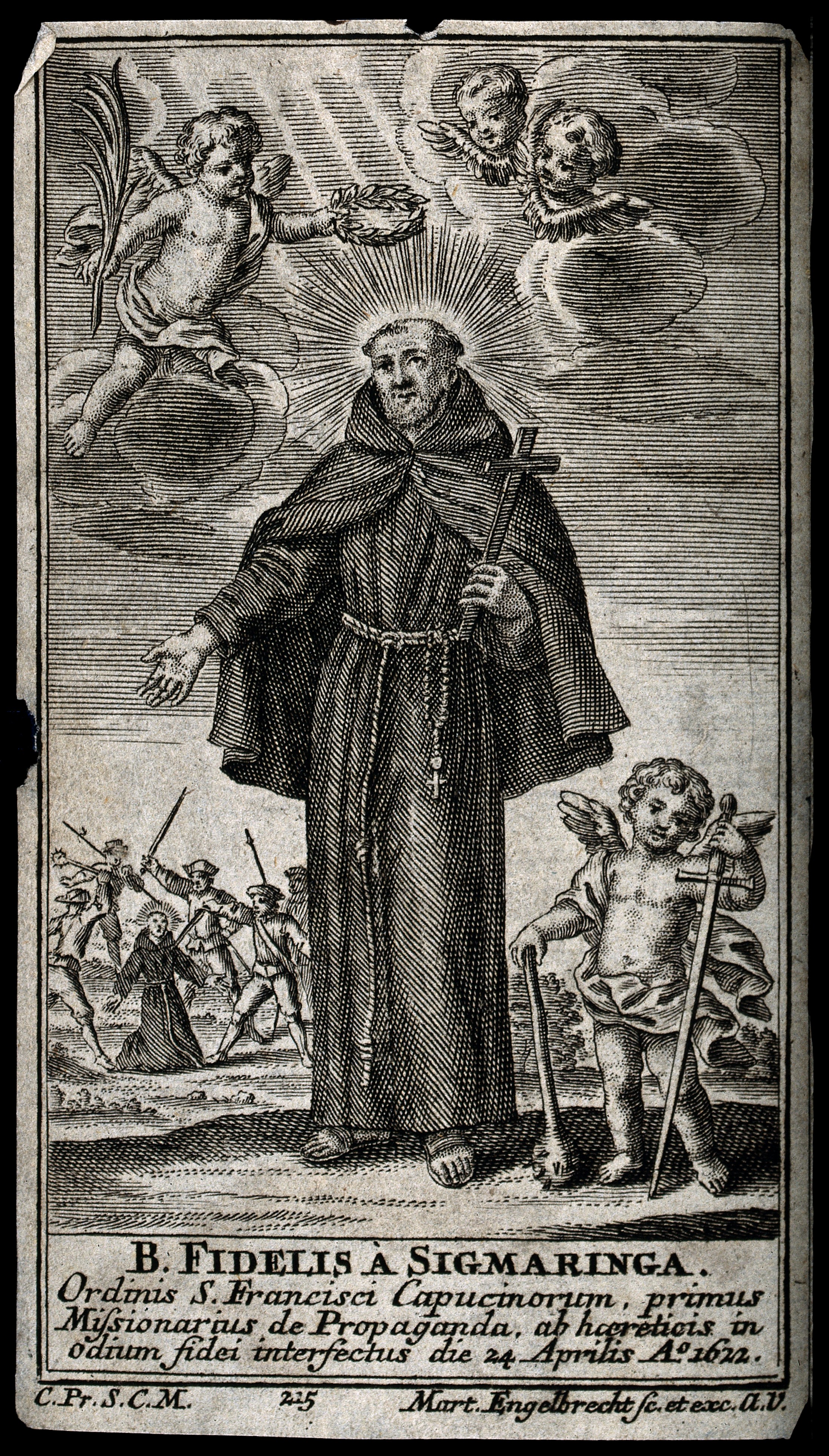
Nella festa del Santo protomartire cappuccino Fedele da Sigmaringen, rilancio questo schietto ed interessante contributo di Ettore Gotti Tedeschi.


Paolo Pilaia, Martirio di S. Fedele, 1729-39, British Museum, Londra

Martin Engelbrecht, Effige dell'allora beato Fedele da Sigmaringa, 1720-50, Wellcome Collection, Londra

La corruzione del matrimonio è la fine della società

di Ettore Gotti Tedeschi

Nella Genesi si legge che Dio creò maschio e femmina affinché fossero una sola carne. L’uomo conseguentemente non dovrebbe osare separare ciò che Dio ha congiunto. Cristo successivamente riconferma l’unità e indissolubilità del matrimonio, come stabilito nella Creazione. Gesù Cristo fu piuttosto chiaro con i suoi discepoli quando dichiara l’unità e indissolubilità del matrimonio: “Chi ripudia la propria moglie e ne sposa un’altra, commette adulterio…”.

Come può esser diventato possibile per un cristiano mettere in discussione le proprietà naturali del matrimonio se vuole continuare a seguire e imitare Cristo? Anche la Chiesa (naturalmente) ha sempre confermato con fermezza la dottrina di indissolubilità del matrimonio. Chi prende atto che è difficile o impossibile ai giorni nostri, per un cattolico, legarsi ad una persona per tutta la vita, rifiutando così l'indissolubilità del matrimonio cristiano e deridendo la fedeltà coniugale, invece di esser capito e scusato, andrebbe pertanto “costretto” misericordiosamente a fare gli esercizi spirituali di S. Ignazio (quelli di un mese!). Ciò al fine di convincerlo della definitività dell’amore coniugale, che ha proprio in Cristo la sua forza e il suo fondamento (Ef, 5-25).

Detta indissolubilità infatti si fonda sul disegno di Dio, manifestato nella Rivelazione, dove Dio stesso vuole e dona l’indissolubilità matrimoniale come frutto, segno ed esigenza, dell’amore assolutamente fedele che Dio stesso ha per la creatura umana e che Gesù vive verso la Sua Chiesa stessa (Giovanni Paolo II, Familiaris Consortio). Questo vincolo che solo la morte può sciogliere è immagine di quello che esiste tra Cristo ed il Suo Corpo Mistico.

È proprio in questo secolo di degrado morale e dottrinale, di dissoluzione dei valori cristiani, che è necessario far conoscere e comprendere la rilevanza della dignità e stabilità matrimoniale: la salute morale oggi è assolutamente legata alla salute del matrimonio perché è la corruzione del matrimonio a decretare la fine certa della società. Ergo, è incomprensibile che,  direttamente o indirettamente, si  permetta di mettere in discussione il sacramento del matrimonio.

Gesù Cristo ha elevato il matrimonio a dignità sacramentale e da quel momento il matrimonio si inserisce nel divino oltreché nell’umano. Gesù Cristo propone poi anche un ideale superiore alle mete di perfezione umana trasformando il matrimonio in vocazione soprannaturale. Infatti la prima realtà che Cristo santifica fu proprio il (suo stesso) focolare domestico, la Sua Famiglia. E nella Sua Famiglia Gesù indica la famiglia cui identificarsi, esempio e fondamento della società umana, dove la Famiglia prende una dimensione sacra, dove i genitori prendono una missione “sacerdotale” (S. Tommaso) nella famiglia che va nutrita corporalmente, intellettualmente e spiritualmente. E ciò si realizza (solamente) con il sacramento del matrimonio, indissolubile.

San Marco nel suo Vangelo ci ricorda la provocazione dei farisei a Gesù contrapponendogli la legge mosaica sul ripudio della moglie o marito. Gesù spiega che Mosè aveva dovuto consentire al divorzio a causa della immaturità del popolo. Ma alla fine dell’esilio i profeti avevano già riprovato il divorzio. (Ml 2, 13-16). Scrive appunto il profeta  Malachia (Ml 2, 13-16) rimproverando i sacerdoti infedeli di cui Dio non accetta le offerte: “Mi domandate il perché? Ecco la ragione: il Signore è testimone fra te e la donna verso la quale sei stato infedele, eppure era la tua compagna, la donna della tua alleanza. Non li ha fatti Dio in un solo essere, carne e soffio di vita? E quest’unico essere a cosa tende se non a una posterità data da Dio? Se alcuno per odio la ripudia, copre di ingiustizia la sua veste, dice il Signore...”.

Fonte: La nuova bussola quotidiana, 20.4.2016

venerdì 5 dicembre 2014

Card. Burke: "Senza il riconoscimento del vero bene comune ... la società si rompe ed è subito assalita dalla violenza e dalla distruzione"

Wisconsin native Cardinal Raymond Burke calls for ‘new evangelization’

Burke greets people after celebrating Mass at Trinity Academy.

By Annysa Johnson


Pewaukee — Catholic education, in the family and in schools, is essential to the transformation of culture and a bulwark against today’s increasingly secular society, Wisconsin native Cardinal Raymond Burke told hundreds of Catholics who gathered Thursday for a fundraising dinner in Waukesha County.
And he called on Catholics to embark on a “new evangelization” that stressed the common good.
“Without the recognition of the common good ... society breaks down and is soon beset by the violence and destruction,” said Burke, who drew repeated standing ovations from the crowd of nearly 300.
A theological conservative who has been critical of what some perceive as the progressive leanings of Pope Francis, Burke said Catholics must resist the secular culture’s “grievous attacks” on marriage and family, the “aggressive homosexual agenda” and attacks on the innocent unborn.
“The Christian life, if lived with integrity today, is necessarily countercultural,” Burke said.
Burke spoke at a $100-a-plate fundraiser for Trinity Academy, a traditional Catholic school in Pewaukee founded and operated by Susan and Robin Mitchell, who are longtime friends and supporters of the cardinal. The dinner was part of a two-day visit that included a tour of the school and Mass for students and faculty.
A Friday Mass will be open to the broader community and is expected to draw, among others, a recent high-profile convert to Catholicism, U.S. Rep. James Sensenbrenner.
Many gathered at the Country Springs Hotel in Pewaukee to see Burke, who serves as an adviser to Trinity. Dozens waited in line for him to sign copies of his new book, “Remaining in the Truth of Christ,” which is a collaboration with four other conservative cardinals.
They greeted him reverentially, many calling him “your eminence” or bowing to kiss his ring. One woman asked him to bless a holy medal and was overcome with emotion as she walked away.
“He is such a beautiful person. Just to be in the same room with him is a blessing,” said Lucia Roman of Sussex.

A defender of church teachings

Several said they respect Burke for upholding church teachings on such issues as marriage and abortion as well as church traditions.
“Tradition is just as important as scripture,” said David Tennessen of Shorewood, who attends St. Stanislaus Parish on Milwaukee’s south side that offers the traditional Latin Mass. “We have a duty to uphold the traditions of the church. We won’t have a church if we don’t.”
Burke, who was born in Richland Center, served as the Bishop of La Crosse and archbishop of St. Louis before Pope Benedict XVI tapped him to head the Vatican’s highest court, the Supreme Tribunal of the Apostolic Signatura, in 2008. Burke is considered an expert on canon law.
Burke has emerged in recent years as the standard-bearer for the theologically conservative wing of the Catholic Church. He is outspoken in his views; he has long maintained, for example, that pro-abortion rights politicians should be denied communion.
Burke bolstered that reputation at the recent Synod of Bishops on the Family in Rome, where he joined other conservatives in rejecting efforts to change teaching — and in some cases, just tone — on how the church responds to gay relationships, marriage, divorce and contraception.
In the wake of the synod, he has amplified his criticism, likening the church to a “rudderless ship” under the current pontiff in a recent interview.
Burke has been twice demoted since the former archbishop of Buenos Aires succeeded Pope Benedict in March 2013.

Removed from post

Last year, Francis removed Burke from an influential panel that helps select American bishops. Last month, Burke was removed from the curia, or Vatican bureaucracy, with his demotion from the Vatican court to the largely ceremonial position as patron of the Knights of Malta.
Vatican watchers have debated whether the moves were punitive or meant to silence Burke.
Author and longtime Vatican journalist John Thavis sees them as neither.
Thavis said it is not unusual for a new pontiff to bring in his own people, and that Francis still has critics in the curia.
“The pope wants those people to be part of the discussion in the church,” said Thavis, author of “The Vatican Diaries,” who blogs at www.johnthavis.com.
He does not believe the moves would likely silence Burke.
“I expect that he will keep speaking his mind. He certainly never hesitated in the past, and I don’t think his new job came with a gag order,” he said. “On the other hand, his influence is lessened.”
Burke will no longer have an automatic seat at key Vatican meetings, according to Thavis. And some have questioned whether he will be invited to take part in next year’s follow-up to the Synod of Bishops on the Family.
In his remarks Thursday, Burke quoted extensively from the writings of Pope John Paul II — whose name elicited applause from the crowd — and Pope Benedict XVI. He did not reference Francis directly, or the controversy surrounding the Synod of Bishops.
His reference to spiritual “seasickness,” which echoed his recent remarks he made about Francis to a Spanish newspaper, drew quiet laughter in some parts of the room.

A believer in education

Burke spoke about the role of Catholic schools and families to lay the moral foundation for children, and as such, for society.
Catholic school enrollment nationally has fallen dramatically over the last half century, from a peak of 5.2 million students in the 1960s to 1.9 million today, according to the National Catholic Education Association.
In the 10-county Archdiocese of Milwaukee, enrollment is 31,619, down from 32,193 in 2011.
Founded in 1997, Trinity operates independently of the Archdiocese of Milwaukee, although when now-Cardinal Timothy Dolan was archbishop, he consecrated the chapel. The school educates 175 students in grades kindergarten through 12.